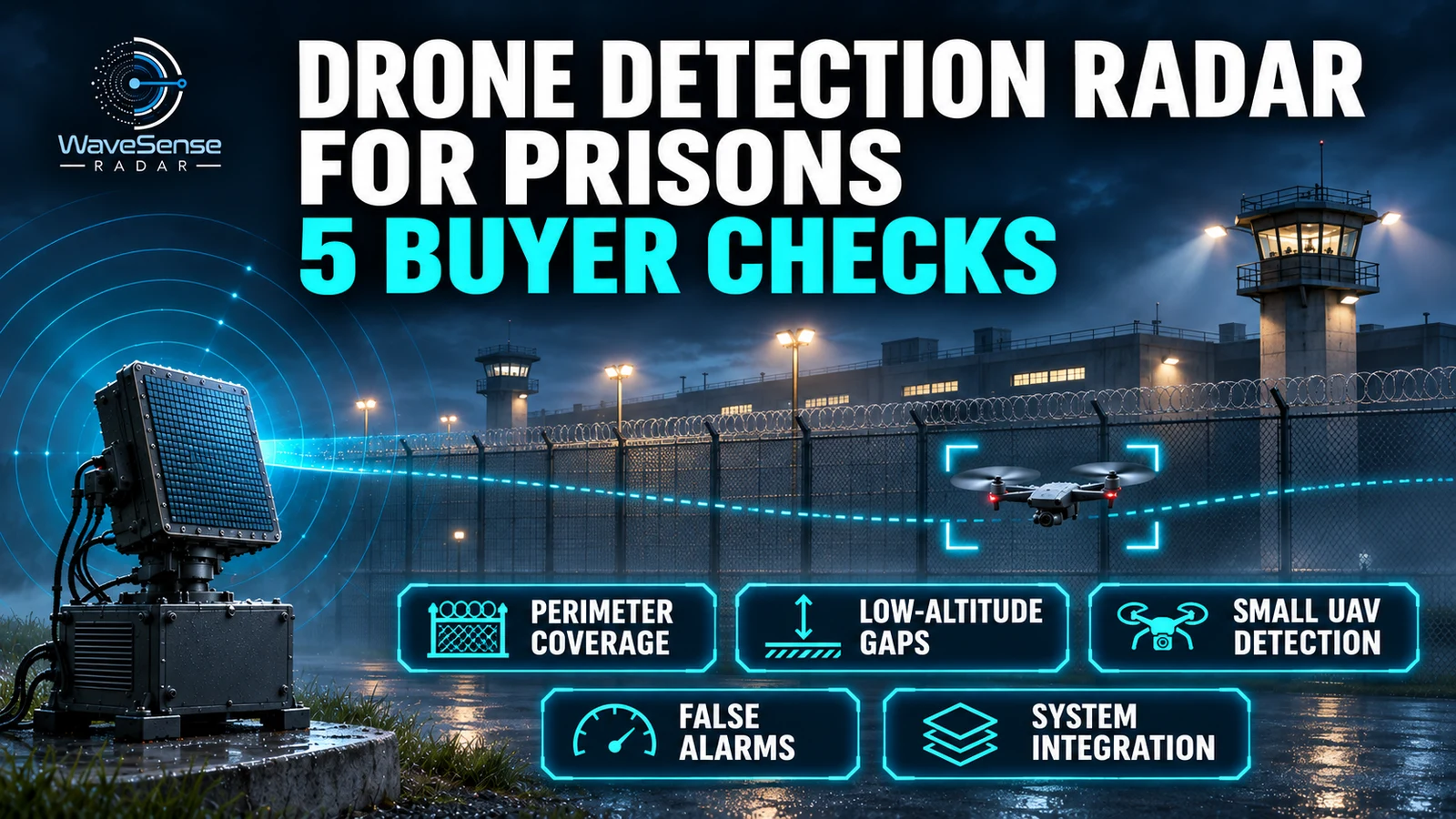
Drone Detection Radar for Prisons: 5 Buyer Checks
Drone Detection Radar for Prisons should provide early warnings, reliable small-UAV tracking, and clear target information that security teams can use before a drone incident develops.
Prisons face different drone risks from airports, ports, and industrial facilities.
Unauthorized drones can deliver contraband, monitor sensitive areas, or create security incidents.
In November 2026, the U.S. Department of Justice reported a prison drone-delivery case involving a package dropped inside a correctional facility.
For prison operators, the main question is not simply whether a radar can detect drones.
It is:
Can the system detect a relevant UAV early enough, maintain its track, and provide useful information to authorized security personnel?
Why Do Prisons Need Dedicated Drone Detection?
Traditional prison security focuses heavily on ground access, fences, cameras, and controlled entry points.
Drones create an additional surveillance problem because they operate in the airspace above and around a facility.
A ground-facing CCTV system may not provide sufficient wide-area coverage to locate a small UAV approaching from outside its current field of view.
Dedicated drone detection technology adds an airborne surveillance layer.
The UK’s Countering Illegal Use of UAS Around Prisons and Sensitive Sites initiative identifies contraband delivery, surveillance, and disruption as important drone-related security concerns.
A prison drone detection system should help operators:
- Detect suspicious airborne activity.
- Track UAV movement.
- Receive timely alerts.
- Review target locations and flight history.
- Support visual confirmation and incident investigation.
Radar can provide the physical detection and tracking layer, while other security systems contribute additional information.
What Must Drone Detection Radar for Prisons Detect?
Drone Detection Radar for Prisons should demonstrate reliable performance against the small UAV types that represent the facility’s actual surveillance requirements.
The system must account for several target characteristics.
Small UAV Size
Small drones can produce weak radar returns.
A manufacturer should identify the tested drone model or radar cross section rather than advertise only a maximum detection distance.
For more information, see our Radar Cross Section Of A Drone.
Low-Altitude Flight
Buildings, vegetation, and other structures can create radar clutter or block direct visibility.
A radar that performs well in an open field may deliver different results at a correctional facility.
Hovering and Slow Movement
Some drones can hold a nearly stationary position.
Their low body velocity creates challenges for radar systems that primarily distinguish moving targets from stationary backgrounds.
Night Operations
Radar does not require daylight to detect a physical aircraft.
However, a complete security system may still need thermal imaging or another suitable sensor to confirm the target visually.
The manufacturer should demonstrate performance under the conditions that matter to the facility.
Can Prison Radar Detect Drones Without RF Signals?
Yes. Suitable radar systems can detect physical UAV targets without relying on drone communication signals.
This is an important difference between radar and RF detection.
RF sensors analyze relevant transmissions from drones, controllers, or other equipment.
Radar measures electromagnetic reflections from the aircraft itself.
Therefore, radar can provide an independent detection method when a UAV operates without a recognizable communication signal.
However, radar cannot automatically identify the drone operator or determine the aircraft’s intent.
For correctional facilities, a layered architecture may combine:
Radar: Physical detection and tracking.
RF detection: Additional communication-related information where available.
EO/IR: Visual confirmation.
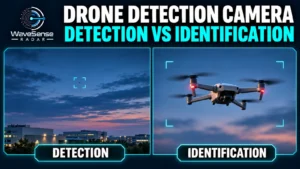
Our Drone Detection System: Radar Vs RF Vs EO/IR article explains how these technologies complement one another.
Buyers should choose sensor combinations based on their surveillance requirements rather than assuming that one technology can perform every task.
Which Radar Specifications Matter Most for Prison Security?
Maximum detection range is important, but it does not describe the complete system.
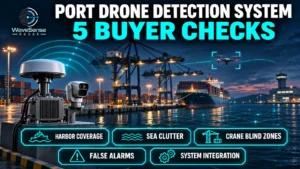
Prison operators should focus on five practical requirements.
| Requirement | What Buyers Should Verify |
|---|---|
| Early warning | When does the system produce a usable UAV alert? |
| Small-UAV tracking | Can it maintain a track on the required drone? |
| Coverage | Does the proposed installation cover the required airspace? |
| False alarms | How often does the system create unnecessary operator alerts? |
| Incident records | Can staff review track history, timestamps, and available evidence? |
Early Warning
A radar may detect a possible UAV before it establishes a stable target track.
The difference matters because operators need usable information, not just an occasional radar return.
Ask the supplier to distinguish:
- First detection
- Confirmed track
- Operator alert
False Alarms
Prison staff should not need to investigate every bird or moving object as a drone threat.
Excessive false alerts can increase workload.
However, aggressive filtering may also remove genuine small-UAV targets.
Our Drone Detection Radar False Alarms article explains why buyers should compare actual operator alerts with detection performance.
Incident Records
A useful system should provide appropriate records for security reviews.
Depending on the software and configuration, these may include:
- Alert timestamps
- Target coordinates
- Track history
- Classification status
- Associated camera images or video
Buyers should verify the available export formats, time synchronization, access controls, and record-retention settings.
The radar alone may not provide every type of evidence required for an investigation.
How Should Drone Detection Radar for Prisons Be Tested?
Drone Detection Radar for Prisons should pass a site-specific acceptance test before the customer relies on it for routine security operations.
The test should measure a small number of practical outcomes.
Test 1: Small-UAV Detection
Use a representative drone.
Record when the radar first detects the aircraft and when the system establishes a confirmed track.
Test 2: Coverage Verification
Evaluate the required surveillance area using an approved site-test plan.
Check whether the installation provides the expected coverage around buildings and other major structures.
Test 3: Tracking Stability
Evaluate whether the radar maintains a continuous track during representative, authorized flight profiles.
Record any track losses or duplicate tracks.
Test 4: False-Alert Monitoring
Operate the system without the test UAV.
Record unnecessary operator alerts during normal environmental activity.
Test 5: Incident Review
Verify that authorized personnel can retrieve relevant alerts, timestamps, target history, and available camera evidence.
A basic acceptance record can help buyers compare suppliers:
| Test Metric | Result |
|---|---|
| Representative UAV | ___ |
| Confirmed tracking range | ___ km |
| Alert delivery time | ___ seconds |
| Track losses | ___ |
| False alerts per hour | ___ |
| Track history export | Yes / No |
| Camera integration | Yes / No |
The facility should conduct all tests under an authorized safety and security plan.
The U.S. Department of Justice’s 2026 report on drone-related smuggling across multiple prisons illustrates why correctional facilities need reliable incident information and investigation support.
What Should a Prison Security Team Ask Suppliers?
Before choosing Drone Detection Radar for Prisons, ask:
- Which drone models or RCS values support the published detection range?
- What stable tracking range can the system demonstrate?
- How does the installation plan address the facility’s required surveillance area?
- How many false alerts occur under representative operating conditions?
- Can the radar share target information with the existing security platform?
- Can operators export incident history and available supporting evidence?
- What product tests, maintenance procedures, and technical support can the supplier document?
These questions reveal whether the product can support the facility’s security workflow.
Buyers should also distinguish drone detection from drone mitigation.
Radar normally provides detection and tracking information. Any additional response or mitigation capability requires its own technical, safety, and legal review.
For broader radar selection criteria, read our Counter-UAS Radar Buyer’s Guide.
Choosing Drone Detection Radar for Prisons
The right Drone Detection Radar for Prisons should help security personnel recognize relevant airborne activity, maintain target awareness, and review incidents without creating excessive unnecessary alerts.
A longer advertised detection range does not automatically provide better prison surveillance.
Buyers should compare:
Representative UAV + Confirmed Tracking + Coverage + False Alerts + Incident Records
These five requirements provide a more useful starting point than maximum range alone.
ChinaWavesense can review the technical requirements of a proposed correctional-facility surveillance project and discuss relevant radar options. The customer should confirm all proposed capabilities against product specifications and available test evidence.
If you are evaluating a prison or correctional-facility drone surveillance project, contact ChinaWavesense with your required UAV target, surveillance coverage, installation conditions, and integration requirements.
FAQ
Can Drone Detection Radar for Prisons Detect Small UAVs?
Yes. Suitable radar systems can detect small UAVs, but performance depends on the drone’s RCS, distance, altitude, clutter, and radar design.
Can Prison Drone Radar Work at Night?
Yes. Radar can detect physical targets without daylight. A separate thermal or other suitable imaging system may assist with visual confirmation.
Can Radar Detect an Autonomous Drone?
Radar can detect a physical UAV without requiring a recognizable RF control link, subject to the radar’s actual detection capabilities.
Can Radar Identify the Drone Operator?
Radar alone generally cannot identify the operator. Compatible RF or other investigative systems may provide additional information where available and legally permitted.
Is Radar Alone Enough for Prison Drone Security?
Not necessarily. Radar provides physical detection and tracking, while cameras, RF sensors, software, and established security procedures may support a broader system.
What Should Buyers Test First?
Start with representative small-UAV tracking, surveillance coverage, operator alert performance, and incident-recording capability.