How Does Low-Altitude Surveillance Radar Work?
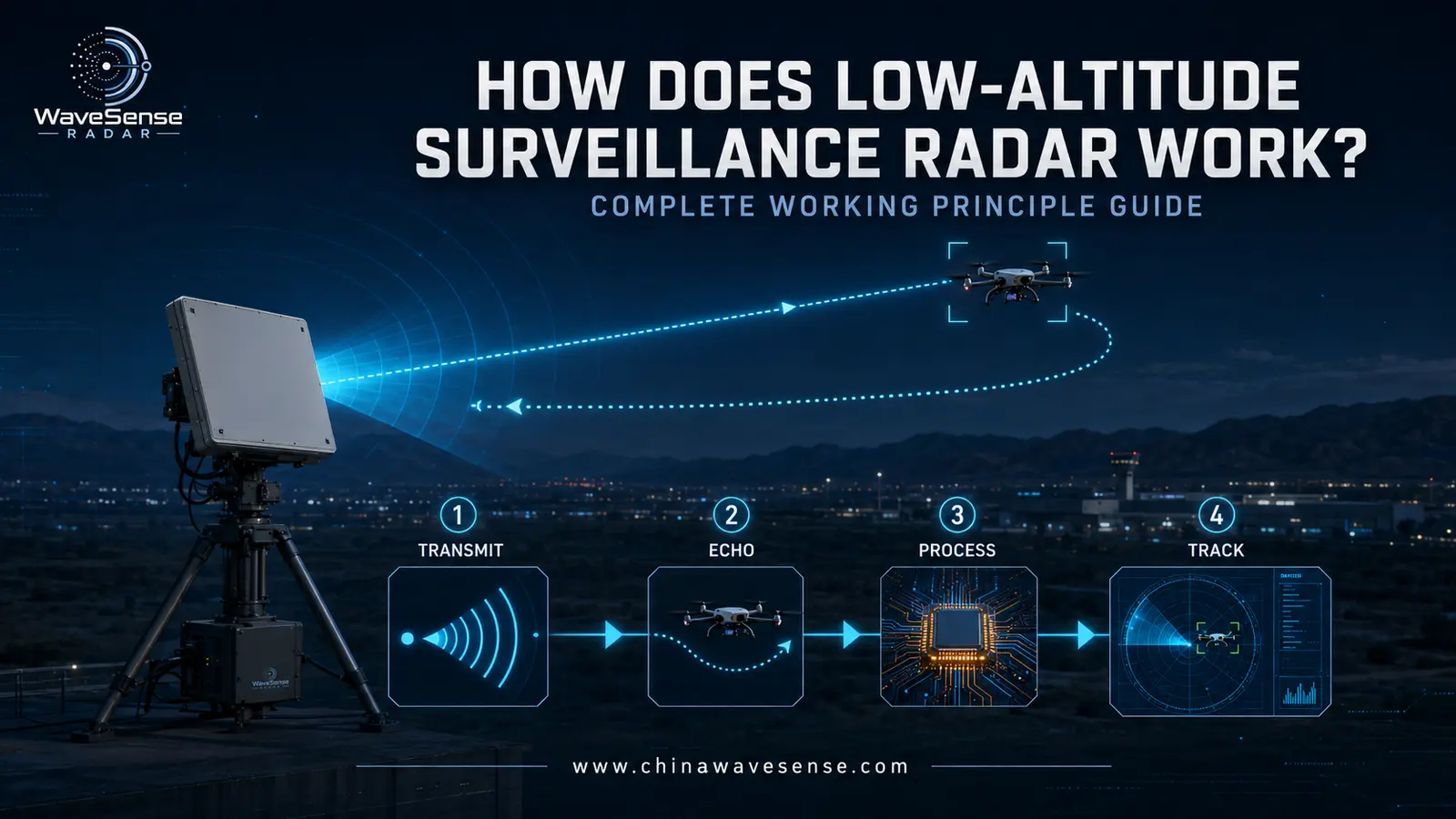
Low-Altitude Surveillance Radar works by transmitting electromagnetic waves, receiving reflected signals from airborne targets, and using advanced algorithms to detect, track, and classify low-flying objects such as drones and helicopters.
Unlike traditional surveillance radar designed for large aircraft, Low-Altitude Surveillance Radar focuses on small, slow-moving, and low-altitude targets that are difficult to detect because of ground clutter, buildings, and environmental interference.
Modern systems combine radar technology, artificial intelligence, and multi-sensor integration to provide continuous low-altitude airspace monitoring.
What Is The Basic Principle Of Low-Altitude Surveillance Radar?
Radar works based on the principle of electromagnetic wave reflection.
The radar antenna sends radio frequency signals into the air. When these signals encounter an object, part of the energy reflects back toward the radar receiver.
The system calculates:
- Target distance
- Flight speed
- Direction
- Altitude
- Movement pattern
by analyzing the returned signals.
According to the National Weather Service Radar Basics, radar systems determine target information by measuring the time delay and characteristics of reflected electromagnetic energy.
How Does Radar Detect Small Drones?
Detecting drones is more challenging than detecting conventional aircraft.
Small commercial drones often have:
- Small radar cross-section
- Low flight altitude
- Slow speed
- Plastic composite structures
These characteristics create weak radar reflections.
To overcome these challenges, modern Low-Altitude Surveillance Radar uses several advanced technologies.
Advanced Signal Processing Technology
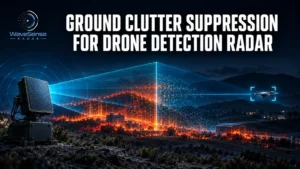
Signal processing is one of the most important technologies in drone detection radar.
The radar system analyzes reflected signals and removes unwanted interference caused by:
- Buildings
- Trees
- Vehicles
- Weather conditions
Advanced filtering algorithms allow the radar to identify moving targets hidden within complex environments.
This technology is especially important for urban security applications where ground clutter is significant.
Doppler Radar Technology For Target Tracking
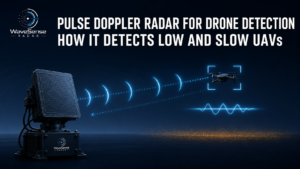
Many Low-Altitude Surveillance Radar systems use Doppler technology to identify moving objects.
The Doppler effect measures frequency changes caused by target movement.
By analyzing these changes, radar can determine:
- Whether an object is moving
- Target velocity
- Flight direction
- Movement characteristics
This helps distinguish drones from stationary objects.
More information about Doppler radar principles can be found from Federal Aviation Administration Radar Systems Information.
How Does Low-Altitude Surveillance Radar Track Multiple Targets?
Modern airspace environments may contain multiple drones simultaneously.
A professional radar system must provide:
- Multi-target detection
- Continuous tracking
- Automatic classification
- Real-time updates
Advanced tracking algorithms create individual target paths and predict future movement.
This capability is important for:
- Airports
- Military bases
- Border security
- Critical infrastructure
where multiple threats may appear at the same time.
What Frequency Does Low-Altitude Surveillance Radar Use?
Radar frequency selection affects detection performance.
Common frequency bands include:
X-Band Radar
X-band radar typically operates around 8–12 GHz.
Advantages include:
- High resolution
- Accurate tracking
- Compact antenna design
It is widely used for detecting small targets.
S-Band Radar
S-band radar operates around 2–4 GHz.
Advantages include:
- Longer detection distance
- Better weather penetration
- Stable operation
It is commonly used for wider-area surveillance.
Ku-Band Radar
Ku-band radar provides higher resolution and is suitable for detecting small drones at shorter distances.
It is often used in compact anti-drone radar systems.
How Does AI Improve Low-Altitude Surveillance Radar?
Artificial intelligence has changed modern radar systems from simple detection tools into intelligent security platforms.
AI algorithms analyze:
- Radar signatures
- Flight behavior
- Speed changes
- Altitude patterns
to determine whether a detected object is:
- A drone
- Bird
- Vehicle
- Other flying object
This significantly reduces false alarms.
Why Is Radar Combined With Cameras And RF Sensors?
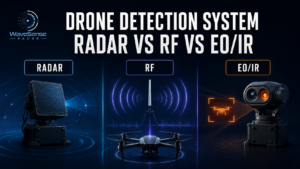
Although radar provides excellent detection capability, modern security systems usually combine multiple sensors.
A complete solution may include:
Radar Detection
Provides:
- Long-range detection
- All-weather monitoring
- Target tracking
Electro-Optical Camera
Provides:
- Visual confirmation
- Target identification
RF Detection System
Provides:
- Drone communication analysis
- Remote control signal detection
This approach is called multi-sensor fusion.
According to CISA Counter-UAS Resources, effective counter-UAS solutions often require integrated detection and response technologies.
What Factors Affect Low-Altitude Surveillance Radar Performance?
Radar performance depends on multiple factors.
Target Characteristics
Important factors include:
- Drone size
- Material composition
- Flight speed
- Altitude
Smaller drones usually require more sensitive radar systems.
Environment Conditions
Performance may be affected by:
- Mountains
- Buildings
- Trees
- Heavy rain
- Electromagnetic interference
Professional radar systems use advanced algorithms to maintain detection reliability.
How To Select A Low-Altitude Surveillance Radar Manufacturer?
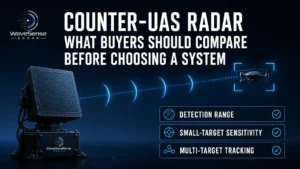
When purchasing a radar system, buyers should evaluate:
Technical Capability
A reliable manufacturer should provide:
- Radar development experience
- Signal processing technology
- Customized solutions
Integration Capability
Modern security projects require radar integration with:
- Command systems
- Cameras
- Alarm platforms
- Countermeasure equipment
Project Experience
Manufacturers with experience in:
- Airport protection
- Military security
- Industrial facilities
usually understand real-world deployment requirements better.
Future Development Of Low-Altitude Surveillance Radar
The future of Low-Altitude Surveillance Radar will focus on:
- AI-based automatic recognition
- Autonomous threat analysis
- Smaller radar hardware
- Lower power consumption
- Networked surveillance systems
As drone usage increases worldwide, low-altitude airspace management will become increasingly important.
Conclusion
Low-Altitude Surveillance Radar provides the essential detection capability required for modern drone security and low-altitude airspace protection. By combining electromagnetic sensing, AI algorithms, and multi-sensor integration, advanced radar systems can identify and track small airborne threats with higher accuracy and reliability.
For governments, defense organizations, airports, and critical infrastructure operators, choosing an experienced Low-Altitude Surveillance Radar Manufacturer is the key to building an effective airspace security system.