Conclusion: Low-Altitude Surveillance Radar is currently the most effective technology for detecting drones, helicopters, birds, and other low-flying targets that conventional air defense systems often miss. Modern systems combine radar, AI algorithms, and multi-sensor fusion to achieve reliable detection in complex environments.
What Is A Low-Altitude Surveillance Radar?
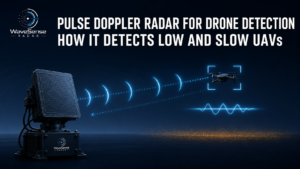
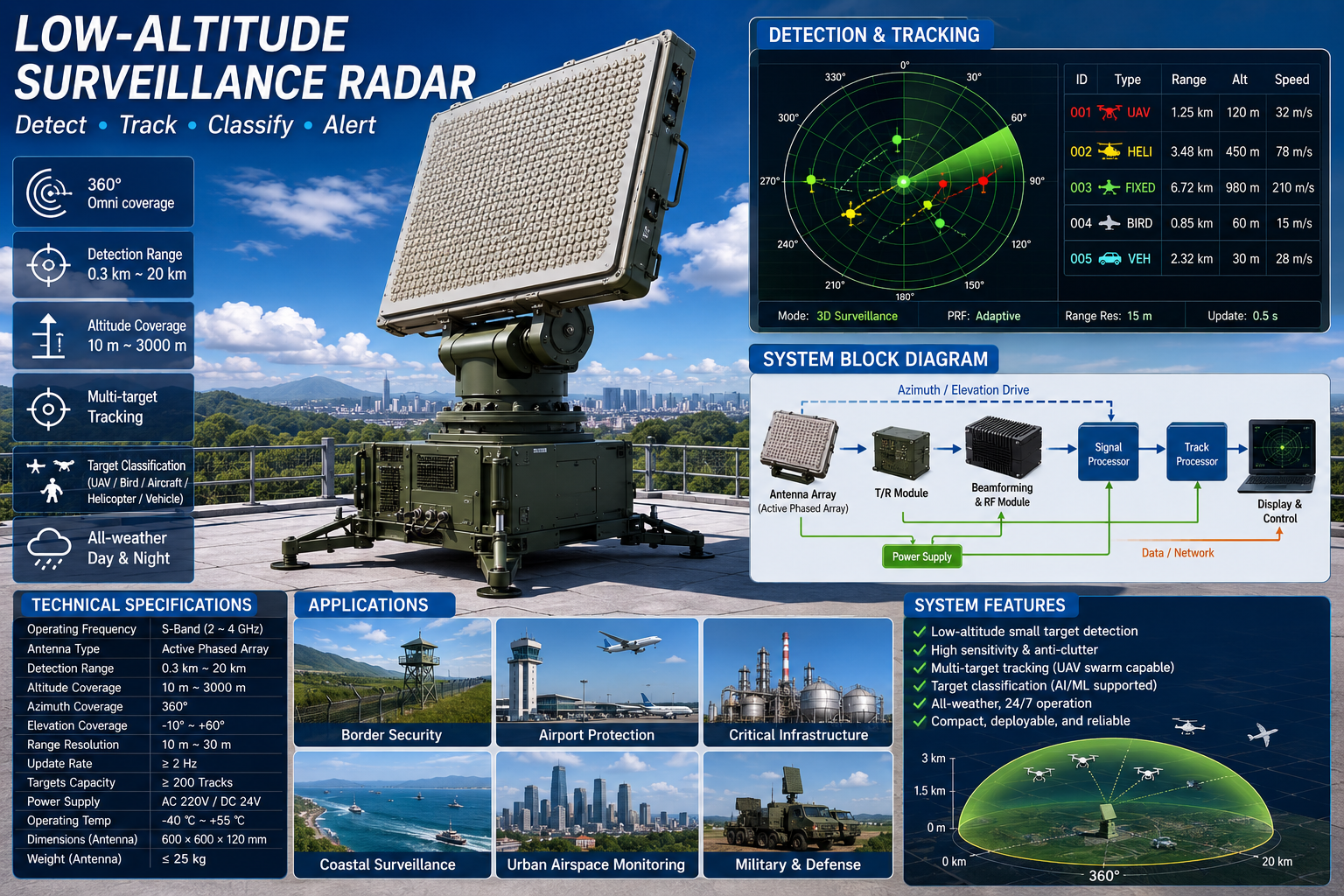
Surveillance Radar is a specialized radar system designed to detect, track, and classify objects flying at low altitudes, typically below 1,000 meters. Unlike traditional air surveillance radars, it is optimized to identify slow, small, and low-observable targets, including commercial drones, loitering munitions, and ultra-light aircraft.
Why Are Low-Altitude Targets Difficult To Detect?
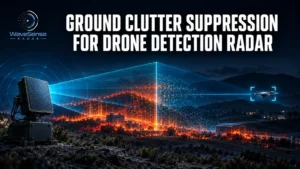
Low-altitude targets often fly close to buildings, mountains, trees, and other obstacles. These environments create ground clutter and signal interference. Small drones may also have a radar cross-section smaller than 0.01 square meters, making them significantly harder to identify than conventional aircraft.
Typical Detection Range Of Low-Altitude Surveillance Radar
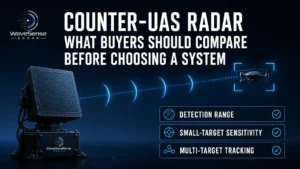
Most modern Surveillance Radar systems can detect small drones at distances ranging from 3 km to over 20 km, depending on antenna size, operating frequency, and target characteristics. Medium-sized helicopters and aircraft can often be tracked beyond 50 km under favorable conditions.
Key Technologies Behind Modern Low-Altitude Surveillance Radar
Modern systems typically integrate:
- Active Electronically Scanned Array (AESA) technology
- Digital beamforming
- AI-assisted target classification
- Multi-target tracking algorithms
- Radar and electro-optical sensor fusion
- Automatic threat prioritization
These technologies significantly improve detection accuracy and reduce false alarms.
Where Is Low-Altitude Surveillance Radar Used?
Applications include:
- Airport and aviation security
- Military base protection
- Critical infrastructure defense
- Border and coastal surveillance
- Smart city airspace management
- Anti-drone and counter-UAS systems
- Large public event protection
Questions Users Want Answered But Most Articles Ignore
Can Low-Altitude Surveillance Radar Distinguish Birds From Drones?
Yes. Advanced systems analyze flight speed, trajectory, acceleration patterns, micro-Doppler signatures, and radar cross-section data. AI algorithms can classify drones and birds with high accuracy, significantly reducing unnecessary alerts.
Can Low-Altitude Surveillance Radar Detect Swarm Drones?
Yes, but performance depends on processing capability. New-generation radars support simultaneous tracking of hundreds of targets and use intelligent algorithms to identify coordinated swarm behaviors and potential threats.
Does Rain, Fog, Or Snow Affect Detection Performance?
Weather conditions can reduce detection range, especially for very small drones. However, modern radar systems operating in S-band, X-band, or Ku-band frequencies use advanced signal processing techniques to maintain reliable performance under challenging environmental conditions.
Why Is Radar Still Necessary If Cameras Already Exist?
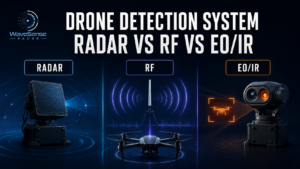
Cameras require clear visibility and sufficient lighting. Radar operates day and night and performs effectively in fog, smoke, dust, and poor weather. Therefore, most modern counter-drone solutions combine Low-Altitude Surveillance Radar with electro-optical cameras and AI analytics for comprehensive situational awareness.
The Future Of Low-Altitude Surveillance Radar
The rapid growth of commercial drones, urban air mobility, and autonomous aircraft is driving demand for more intelligent low-altitude surveillance solutions. Future systems will increasingly integrate AI, cloud computing, sensor fusion, and autonomous decision-making to provide real-time protection for increasingly complex low-altitude airspaces.